
Hospital discharge: organizing the return home
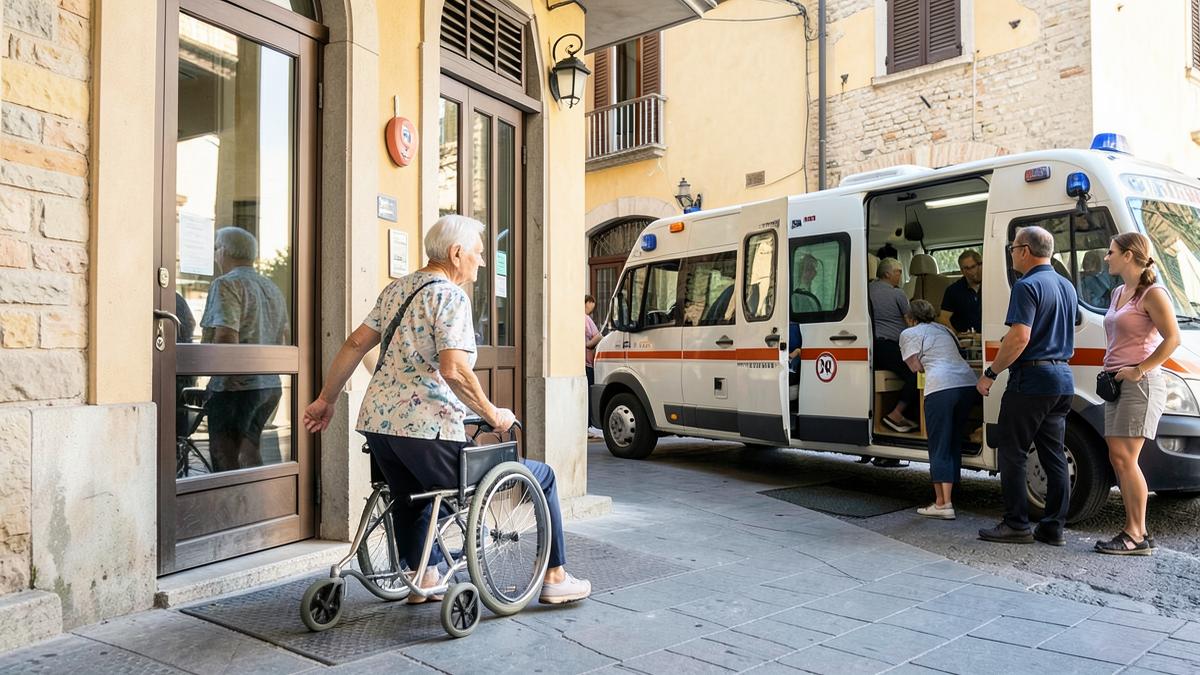
Ambulance hospital discharges are a topic of increasing relevance in the Italian healthcare landscape. More and more families, hospitals, nursing homes (RSA), private clinics, and insurance funds are seeking a reliable partner to manage scheduled patient transfers requiring qualified assistance during transit. In this in-depth guide, we explain, clearly and comprehensively, everything you need to know about ambulance hospital discharges: when it's needed, how to organize it, what costs to expect, which regulations govern the sector, and how to choose the most suitable service for your clinical situation.
Trasporto Ambulanza Italia is a national platform specializing in Bital discharges and all scheduled private medical transport services. We operate 24/7 in all 107 [Italian provinces through a network of certified and selected partners. To speak with our operations center immediately, you can call 080 6650062 or fill out the form on the Contacts page to receive a free quote in minutes.
The regulatory framework for medical transport in Italy
Medical transport by ambulance is an activity regulated by precise legislative layers involving state, regional, and community levels. The cornerstone is the Decree of the Ministry of Health (Ministero della Sanità) December 17, 1987, n. 553, which defines the technical characteristics of rescue vehicles and medical transport. Added to this are the European technical standards of the UNI EN 1789 family for road ambulances and UNI EN 1865 for patient transport systems.
On an operational level, the Ministry of Health (Ministero della Salute) coordinates national guidelines, while each Region regulates with its own resolutions the issuance of health authorizations to private operators, personnel standards, and the hygiene and health requirements of the vehicles. The Italian National Institute of Health (Istituto Superiore di Sanità) periodically publishes recommendations and clinical guidelines that directly impact transport protocols, especially for complex patients.
Regarding emergencies, the reference remains the 118 Emergency and Urgency Medical Service (Servizio Sanitario di Urgenza ed Emergenza 118), which is free and activated via the unified European number 112. Private medical transport, on the other hand, covers everything that is scheduled, deferrable, or complementary to public services.
Vehicles, equipment, and crew
Ambulances used for medical transport are classified into two main categories:
- Type A — emergency ambulance: designed for urgent and emergency interventions, equipped with a semi-automatic defibrillator (AED), multiparameter monitor, lung ventilator, aspirator, set of drugs, and advanced medical devices. Crew composed of at least one qualified rescuer (minimum 120 hours of training) and, upon request, a nurse or doctor.
- Type B — transport ambulance: designed for scheduled transport of stable patients, it still ensures oxygen therapy, first aid, immobilization devices, and a self-loading stretcher.
All vehicles in our network comply with the requirements of DM 553/1987 and UNI EN 1789 standards, are air-conditioned, sanitized after each service, and equipped with GPS tracking systems. Personnel are trained according to regional guidelines and procedures recommended by the Italian Red Cross (Croce Rossa Italiana) and Third Sector entities.
When to request the service
The most frequent situations in which families, hospitals, nursing homes (RSA), and general practitioners contact us are:
- Hospital discharges of non-self-sufficient or bedridden patients;
- Inter-hospital transfers to highly specialized centers;
- Accompaniment for medical appointments and diagnostic tests;
- Continuous transport for dialysis three times a week;
- Transport for radiotherapy, chemotherapy, rehabilitation;
- Out-of-region transfers for family reunification;
- Medical repatriations from abroad or distant regions;
- Bariatric transport for high-weight patients;
- Pediatric and neonatal transport;
- Assistance for sporting events, concerts, fairs and conferences, and film sets.
What to prepare at home and what the crew does
The day of discharge is one of the most sensitive. Often families are unprepared: the patient is discharged in the morning, requiring transport to be organized in a few hours, the bed to be prepared, any medical devices (wheelchair, commode, walker), medication, and meal aids.
Our crew handles:
- picking up the patient from the ward with a proper handover;
- managing stairs, narrow elevators, difficult access (foldable transport chair);
- accompanying the patient to their bed at home;
- providing the family with a transport report including times and vital signs recorded.
All details are on the Hospital Discharges page. For advice on preparing the home, we refer to the Ministry of Health's guidelines on integrated home care (ADI).
How a service is organized step-by-step
Effectively organizing medical transport requires a systematic approach. Here is the operational flow we apply to every request:
- First contact: The family or facility calls 080 6650062 or sends a request from the Contacts page. The center collects route, date, time, and clinical picture.
- Clinical evaluation: The appropriate vehicle (Type A or B), crew (rescuers, nurse, doctor), and any necessary devices (oxygen, aspirator, infusion pumps) are identified.
- Written quote: A detailed quote is sent via email or WhatsApp, including the fee, any night/holiday surcharges, and payment methods. Our rates are public on the Rates page.
- Confirmation and booking: Upon written confirmation from the client, we reserve the dedicated vehicle.
- Service execution: The crew arrives punctually for pickup, takes charge of the patient with a handover from hospital staff.
- In-transit monitoring: Vital signs are checked, and updates are communicated to the family via WhatsApp.
- Delivery and invoicing: Arrival at the destination, handover to the receiving department, issuance of a traceable invoice valid for a 19% tax deduction.
Costs and rates: how a quote is calculated
The cost of an ambulance transport depends on multiple variables, not a single formula. The main factors affecting the final price are:
- Distance in kilometers traveled (outbound, possible empty return of the vehicle);
- Type of vehicle (Type A vs Type B);
- Crew composition (rescuers, nurse, doctor);
- Oxygen and medical devices required for the clinical condition;
- Time slot: night surcharge 10:00 PM–6:00 AM, holidays and pre-holidays;
- Waiting times at the facility;
- Maritime boardings or airport procedures for islands.
Indicative values range from €1.80–€3.00 per km for basic services up to more structured rates for transports with a doctor on board or long distances. All details are on the Ambulance Transport Costs and Rates pages. Expenses are 19% tax-deductible under Article 15 of the TUIR (Consolidated Income Tax Act), by retaining the invoice and proof of traceable payment, as also noted by the Italian Revenue Agency (Agenzia delle Entrate).
Safety, privacy, and service quality
Every transport is documented with a patient file and informed consent for the processing of health data, compliant with GDPR (EU Regulation 2016/679) and the directives of the Italian Data Protection Authority (Garante per la protezione dei dati personali). Ambulances are insured with healthcare liability (RC sanitaria) and vehicle liability (RC veicolo) policies, sanitized after each service according to protocols published by the Italian National Institute of Health (Istituto Superiore di Sanità) for the prevention of healthcare-associated infections.
Personnel are equipped with PPE (FFP2 masks, gloves, disposable gowns) and trained in manual handling procedures and BLS-D first aid, in line with the recommendations of the European Resuscitation Council.
Territorial coverage: all 107 provinces
We operate extensively across all Italian provinces and major municipalities, with available local partners that drastically reduce waiting times. The most requested routes—Milan-Rome, Naples-Milan, Turin-Bologna, Florence-Rome, Bari-Rome—are covered daily; you can find routes and indicative prices on the Popular Routes page. For out-of-region transfers, we guarantee reinforced crews (double driver beyond 400 km) and dedicated vehicles without transshipment.
Real-world use cases from our operations center
To make the described concepts concrete, we share some typical cases that our center manages daily throughout Italy. Names are, of course, omitted out of respect for privacy, as per EU Regulation 2016/679, but the situations described reflect services actually provided.
Case 1 — Complex discharge from intensive care. A 68-year-old patient, post-cardiac surgery, is discharged from a Milan hospital to a rehabilitation facility in Pavia. Request: Type A ambulance with a nurse on board, oxygen therapy, continuous monitoring. Organization time: 4 hours from the family's call. The service concludes with delivery to the ward and a parameter report.
Case 2 — Interregional transfer to an oncological reference center. A 54-year-old patient residing in Calabria needs to reach a highly specialized center in Milan for targeted therapy. The journey lasts approximately 12 hours: we arrange for a double driver, dedicated vehicle, scheduled stops every two hours, and WhatsApp updates to the family every hour. The invoice is issued directly to the patient's supplementary health fund.
Case 3 — Continuous transport for dialysis. A 72-year-old nephropathic patient, residing on the outskirts of Rome, needs to go to the dialysis center three times a week for a 4-hour session. We sign a monthly continuous package: the same driver when possible, outbound, waiting time, and return home, a single monthly invoice valid for the 19% tax deduction.
Case 4 — Medical repatriation from Spain. An Italian citizen on vacation in the Balearic Islands suffers a serious road accident. We coordinate with the travel insurance for discharge from Palma de Mallorca hospital, a scheduled flight with medical assistance and stretcher on the Palma-Rome Fiumicino route, and an ambulance from Rome airport to the destination rehabilitation facility. All within 36 hours.
Common pitfalls to avoid
Over the years, we've noticed some mistakes that recur frequently. Knowing them helps families and healthcare professionals to avoid them:
- Calling 118 for a scheduled service: 118 is an emergency service; overburdening it for scheduled discharges or transfers diverts resources from those in urgent need and does not guarantee the service anyway. For anything that is not a life-threatening emergency, choose private medical transport.
- Underestimating the time slot: Organizing a discharge at 10:00 PM is possible but more expensive. When possible, scheduling during daytime weekdays reduces surcharges.
- Trusting "the first available": Without verifying authorizations, vehicle compliance, and insurance coverage, there's a risk of ending up with a non-compliant service. Always check Certified Partners.
- Paying in cash: Above €100, cash payment is no longer traceable, and expenses are not tax-deductible. Always demand an invoice and bank transfer/card payment. See the guidelines on the Italian Revenue Agency website.
- Not communicating the complete clinical picture: Omitting information (allergies, oxygen therapy, high weight, necessary medical devices) forces the crew to improvise. An accurate patient file saves time and increases safety.
- Underestimating travel duration: An interregional route can last 8-12 hours. Hydration, catheter management, ergonomic positioning, and the possibility of a brief medicalized rest stop at a service area should be planned.
Essential Glossary
- DM 553/1987: Ministerial Decree defining the technical characteristics of rescue and medical transport vehicles in Italy.
- UNI EN 1789: European technical standard on requirements for road ambulances (types A, B, C).
- UNI EN 1865: European technical standard on patient transport systems (stretchers, chairs, flexible stretchers).
- Type A: Emergency ambulance, equipped for resuscitation.
- Type B: Scheduled transport ambulance for stable patients.
- PRM: Persons with Reduced Mobility (ENAC/ENAV airport terminology for assistance management at the airport).
- BLS-D: Basic Life Support – Defibrillation, basic cardiopulmonary resuscitation training with a defibrillator.
- AED: Automated External Defibrillator.
- ADI: Integrated Home Care, ASL service for home medical treatment.
- TUIR: Consolidated Income Tax Act (DPR 917/1986), reference for tax deductibility of medical expenses.
- Stretcher: Stretcher on scheduled flights for transporting recumbent patients.
- Fitness to fly: Medical certificate of fitness to fly, required by airlines for patients with medical conditions.
Frequently Asked Questions
Q: How much does private ambulance transport cost? The average cost ranges between €1.80 and €3.00 per kilometer for a basic service with a stretcher and paramedics. The price varies depending on the type of vehicle, crew composition (paramedics, nurse, or doctor), time slot, and distance. For a personalized quote, visit the Ambulance Transport Costs page or call 080 6650062.
Q: Are ambulance transport expenses tax-deductible? Yes. Medical transport expenses are among the medical expenses deductible at 19% under Article 15 of the TUIR (Consolidated Income Tax Act). An invoice addressed to the patient or dependent family member and traceable payment (bank transfer, card, check) are required. More details can be found on the Italian Revenue Agency website.
Q: How quickly can I get an ambulance? For scheduled services, we recommend 24-48 hours' notice. For urgent cases, we activate the crew in a few minutes, 24 hours a day, including holidays. Call 080 6650062 to check immediate availability.
Q: Do you operate out-of-region and abroad? Yes. We specialize in out-of-region transports, long-distance national travel, and medical repatriations from abroad, both by land and by air (scheduled flight with assistance or dedicated air ambulance).
Q: Can I pay with insurance or a health fund? Yes. We work in agreement with the main Italian insurance companies and supplementary health funds. Direct payment (payment and subsequent reimbursement) or, in some cases, direct invoicing to the insurance company is possible. See the Payments page.
Q: Do the ambulances comply with regulations? All vehicles in our network comply with DM 553/1987 and the European technical standards UNI EN 1789 and UNI EN 1865. Operators are authorized by their respective Regions, and personnel are trained according to the guidelines of the Ministry of Health (Ministero della Salute).
Why choose Trasporto Ambulanza Italia
For over 15 years, we have been among the leading Italian operators in the private scheduled medical transport sector. Our network covers all 107 Italian provinces with selected, authorized, and periodically audited partners. We operate 24 hours a day, 365 days a year, with a single operations center reachable at 080 6650062.
Our strengths:
- Transparent pricing: All prices are public on the Rates and Ambulance Transport Costs pages.
- Specialization in out-of-region and long-distance travel: We are number 1 in Italy for interregional transfers and long-distance national travel.
- 24/7 service throughout Italy: Extensive coverage in all provinces and major municipalities.
- Active insurance agreements with major health funds (see Payments).
- Trained and certified crews according to national and European standards.
- 19% tax-deductible medical invoice according to the TUIR (Consolidated Income Tax Act).
For any questions or to receive a personalized quote immediately, call 080 6650062 or write to us from the Contacts page. Also read How it works our platform and discover all our medical transport services.
Request a free quote now
Do you need to organize private ambulance transport? Our operations center is active 24 hours a day, 7 days a week, including holidays. Call 080 6650062 to speak immediately with an operator, or fill out the form on the Contacts page to receive a free quote in a few minutes. Discover all our medical transport services, consult the transparent rates, and read how our platform works.
For further information, we also recommend consulting the institutional resources of the Ministry of Health (Ministero della Salute), the Italian National Institute of Health (Istituto Superiore di Sanità), and the Italian Revenue Agency (Agenzia delle Entrate) regarding deductions and health regulations.
Related articles
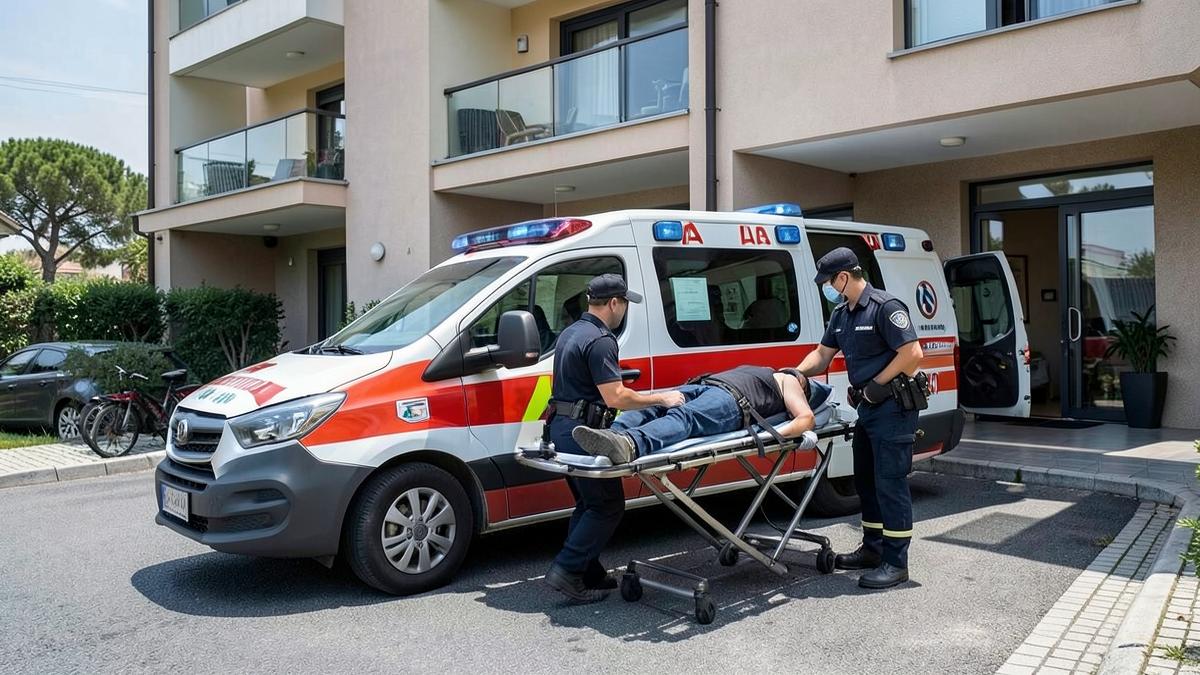
Private Ambulance Transport: When is it Needed and How Does it Work?
Private Ambulance Transport: When is it Needed and How Does it Work?
This guide explains when to call a private ambulance, how it differs from 118, and what services it offers.
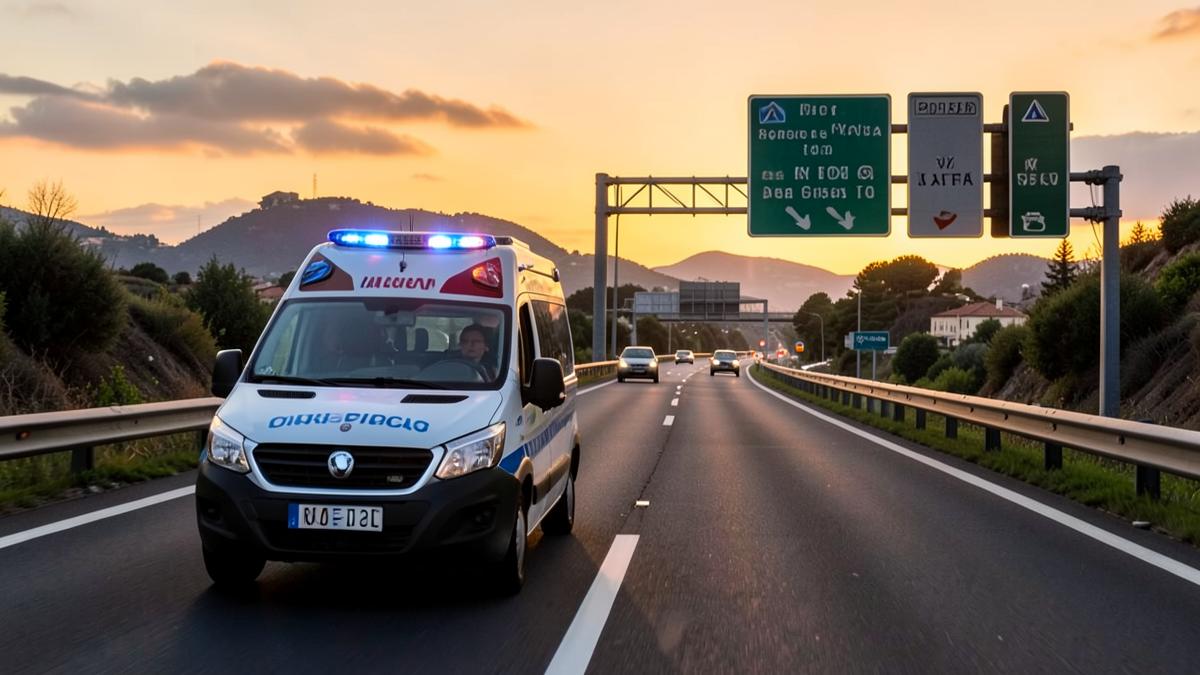
Out-of-Region Ambulance Transport: A Step-by-Step Guide
Out-of-Region Ambulance Transport: A Step-by-Step Guide
A practical guide for planning an interregional medical transfer: times, documents, costs, and what to expect during the journey.

Tax deductions for medical transport: what you need to know
Tax deductions for medical transport: what you need to know
Ambulance transport costs are 19% tax-deductible; here's when, how, and with what documents to claim them on your tax return.